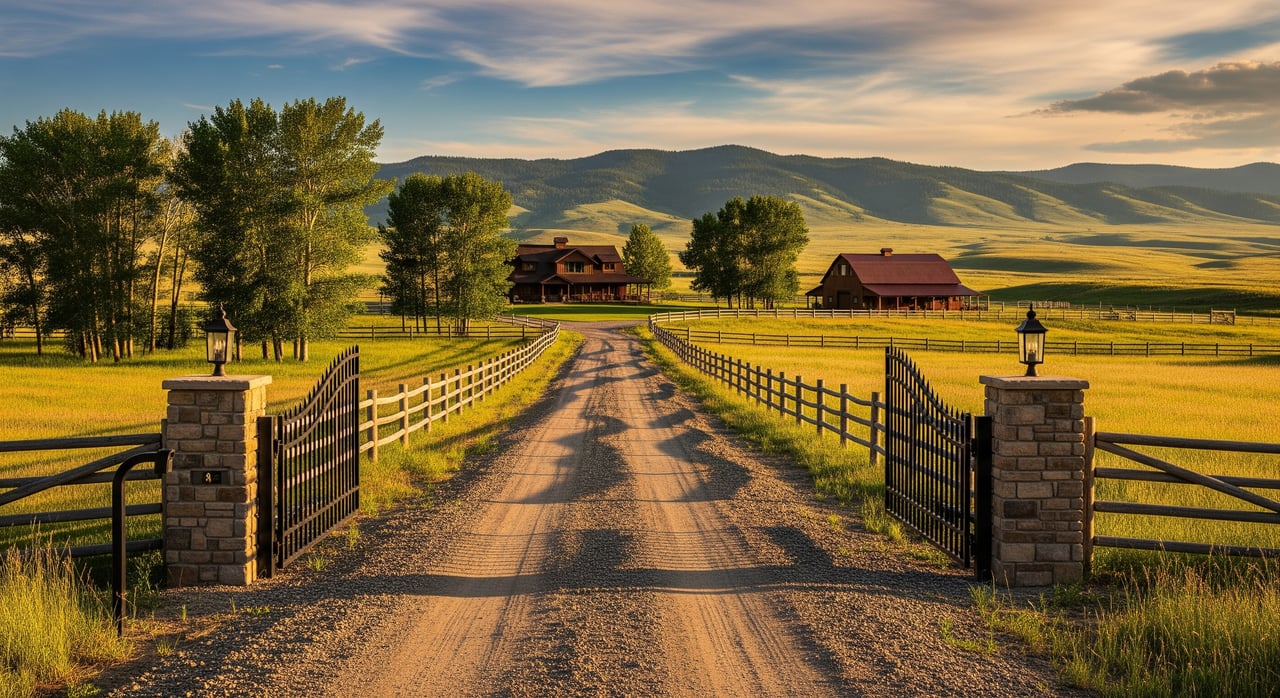
Big Timber Ranch Road Maintenance and Private Access
November 6, 2025
November 6, 2025
Are you building or improving a private ranch road near Big Timber? Getting access right protects your land, your equipment, and your peace of mind year-round. With the right permits, gravel design, drainage, and a clear maintenance plan, you can avoid costly failures and ensure reliable access in every season. This guide walks you through local permitting, road building best practices, winter planning, and shared-road agreements specific to Sweet Grass County. Let’s dive in.
Before you move dirt, confirm who has jurisdiction over your access. If your driveway connects to a county road, Sweet Grass County sets approach standards and typically requires a permit. If your access meets a state highway, the Montana Department of Transportation handles the approach permit. Stream work or culvert replacements may also trigger state or federal approvals, so plan early.
Start with Sweet Grass County Road and Bridge and the County Commissioners for approach or encroachment permits, right-of-way widths, and driveway standards. Contact the nearest MDT district office if your access ties into a state primary or secondary highway. If you expect work in or near a drainage, contact the local conservation district and the Montana Department of Natural Resources and Conservation for stream or streambed rules, and ask early about any U.S. Army Corps of Engineers requirements. Check with the county clerk and recorder to verify any existing easements or recorded shared-access documents.
Ask the county for written driveway standards, such as right-of-way width, sight-distance requirements, and culvert sizing rules, and request a current fee schedule. Get all permit conditions in writing and keep them together with maps or any recorded easements for shared access. If you plan to work near a drainage, consult state resource agencies or the local conservation district before you finalize plans. Mark existing utilities by calling a locate service so you do not damage buried lines during excavation.
Ranch roads near Big Timber need to handle freeze-thaw cycles, spring runoff, and equipment loads without rutting or washing out. A good design starts with stable subgrade, the right aggregate mix, and careful compaction. Match material thickness and width to your traffic and soils.
Begin with a stable subgrade by removing organic soils and soft spots, and compact the native material until it bears weight without pumping. Add a base layer of crushed rock if needed to create a working platform, then place a surface course of well-graded crushed aggregate. For many low-volume ranch roads, a total of 6 to 12 inches of quality aggregate is common, compacted in lifts. Base layers often use larger rock, and a wearing surface of crushed 3/4-inch minus provides compaction and durability.
Use a vibratory roller or equivalent equipment to compact each lift and lock fines into the voids, which cuts down on settlement and potholes later. If your subgrade is weak or seasonally wet, add geotextile fabric to separate fines and improve load distribution, or consider soil stabilization methods. Always confirm gradations, allowable fines, and thickness with county or MDT specifications when you are within their right-of-way.
Set a clear travel width. A single-lane private ranch road typically ranges from 12 to 14 feet wide, with occasional turnouts for passing. Build a 3 to 6 percent crown to shed water off the surface and into ditches. Where you cut into slopes, aim for side slopes of 3:1 or flatter to reduce erosion risk, space permitting.
Add turnouts or hammerheads so equipment can pass and turn safely without backing into county roads. If you plan for trailers or heavy trucks, lay out wider radii and consider thicker base layers at tight corners and approaches.
Counties and MDT often require specific surfacing and compaction standards for work within their right-of-way, including approach segments. Ask for written standards to avoid rework during inspection. For technical support, contact the local NRCS field office or conservation district for guidance on drainage and erosion control, and inquire about any cost-share programs for access road improvements.
Most rural road failures come from water, not traffic. The right ditching, culvert sizing, and outlet protection will protect your road base and keep the surface intact through spring melts and cloudbursts.
Design culverts for watershed runoff, not just normal trickle flows. Use local hydrologic methods such as NRCS approaches to estimate peak flow if your road crosses a drainage. Keep a healthy ditch profile on the uphill side to carry water and prevent ponding against your road. Maintain the 3 to 6 percent crown so water sheds from the surface and does not infiltrate the aggregate.
Install energy dissipation at outlets. Rock riprap, rock checks, or other dissipators prevent scouring at the culvert outlet and keep your ditch from unraveling. On steep segments, use grade breaks or small rock checks in ditches to slow water and reduce sediment transport.
Common culvert materials include corrugated metal pipe, smooth HDPE, and reinforced concrete. HDPE resists corrosion but requires proper anchoring and bedding. Galvanized or coated corrugated metal performs well when sized and installed correctly. Set culverts at the proper invert and grade to match the ditch and avoid headcuts, and make them long enough to accommodate shoulders and side slopes.
Use end sections, rock headwalls, or cast headwalls to stabilize inlets and outlets and reduce erosion. Many counties require permits and inspections for culverts within the county right-of-way, and stream crossings can trigger additional state or federal approvals. If fish are present, ask state resource agencies about any fish passage standards that might apply.
During construction, install silt fencing or straw wattles to keep sediment out of waterways. Seed and re-vegetate disturbed slopes with native grasses as soon as grading is complete. After major runoff events, inspect ditches and culverts, remove debris, and touch up erosion control features as needed. Keep culvert inlets visible and marked so they are not buried during future maintenance or snow plowing.
Sweet Grass County winters bring cold, drifting snow, and freeze-thaw cycles that can chew up a poorly built road. Plan now for plowing, storage areas, and safe turnarounds to keep access open when it matters most.
Reserve snow storage areas so plows can place windrows without blocking sightlines, burying culverts, or covering gates. Put gates where a plow can turn around safely, with sturdy hinge posts and clear approaches. Add hammerhead turnarounds so heavy equipment does not have to back onto county roads. Consider snow fences, shelterbelts, or tree rows to reduce drifting across the travel way, and place them so they do not concentrate snow on a neighbor’s road.
Clarify whether the county plows the county road serving your access and where that service stops, such as at a property line or gate. Many ranch roads rely on private contractors or neighbor agreements for plowing, sanding, and emergency response. Sand or grit is usually the best choice for traction on gravel, while heavy salt use is less effective on unpaved surfaces and can impact nearby water sources and infrastructure. Establish a winter maintenance plan that spells out who sands, where material is stored, and how you respond to ice events.
Keep equipment in scale with your road width to avoid pushing snow through fence lines. Set a gate key policy so plows and emergency services can access the road when needed. Keep contractor and neighbor contacts handy and agree on an emergency plan before the first big storm.
On soft aggregate, avoid running steel cutting edges directly on the surface. Angle the blade or use a cutter bar approach to prevent peeling off your wearing course. Consider a more durable surfacing at intersections where heavy turning and braking occur.
Shared access is common on ranchland around Big Timber. A concise, recorded agreement keeps expectations clear and protects long-term access for everyone who relies on the road.
Local extension services and conservation districts often have templates or guidance you can adapt. Because easement law is specific, have a local real estate attorney review the agreement before you record it with the county clerk and recorder. Recording puts future owners on notice and reduces risk when properties change hands.
Plan a recurring maintenance budget, recognizing that many small shared rural roads require hundreds to low-thousands of dollars per mile per year for routine work. Larger periodic resurfacing costs will occur less frequently. A simple approach is to set a capital reserve equal to the estimated resurfacing cost divided by the expected useful life, such as cost over 10 to 20 years.
Before construction or alteration
Design and build phase
Post-construction and ongoing maintenance
Annual inspection cues
When your private road is permitted, well built, and well drained, you protect daily operations and the long-term value of your ranch. Buyers and lenders look for dependable, legal access that performs in all seasons. If you want guidance tailored to your acreage or you are preparing to sell, let’s talk about the smartest path forward for your access and your asset.
If you would like expert advice or a discreet assessment of how road access impacts your property’s value, connect with Unknown Company.
Stay up to date on the latest real estate trends.
Get assistance in determining current property value, crafting a competitive offer, writing and negotiating a contract, and much more. Contact Stacie today to discuss all your real estate needs!
Let's Get Started