Building Versus Buying A Ranchette Near Bozeman
June 25, 2026
June 25, 2026
If you are weighing whether to build or buy a ranchette near Bozeman, you are asking the right question. In this market, the decision is rarely just about price. It is usually about how much time, uncertainty, and customization you are willing to take on to get the property that fits your goals. This guide will help you compare both paths, understand the local factors that matter in Gallatin County, and move forward with more clarity. Let’s dive in.
Bozeman remains a premium market, which shapes the build-versus-buy conversation from the start. In May 2026, Redfin reported a median sale price of about $672,098 in Bozeman, with homes averaging about 80 days on market. HUD’s June 2025 Bozeman housing analysis also noted that existing-home prices in the area were 87% above the national average, while new-home prices were 12% above the national average.
That matters because your choice is often less about finding a “cheap” option and more about choosing the right tradeoff. Existing inventory is concentrated more heavily in the city of Bozeman, while newer development has shifted outward toward areas such as Belgrade. For ranchette buyers, that often means balancing convenience and established infrastructure against privacy, acreage, and design freedom.
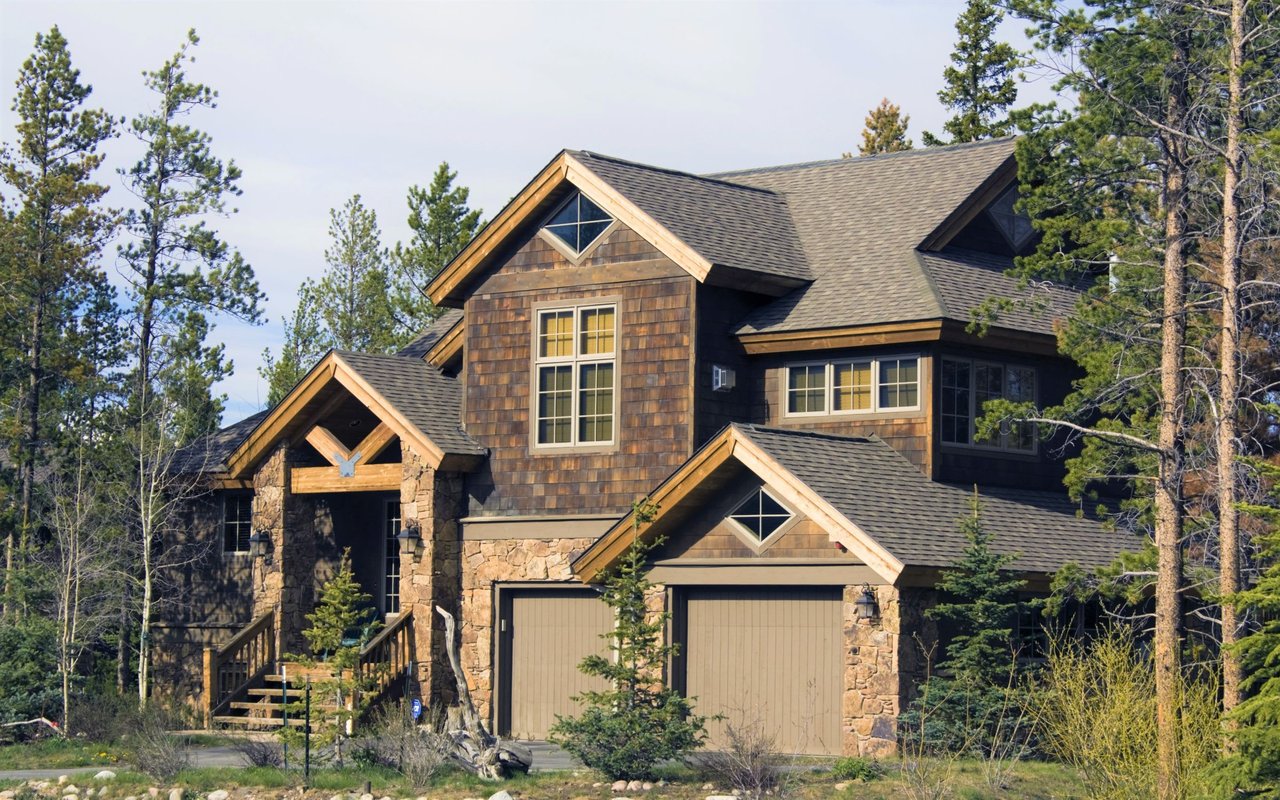
Building on acreage can make sense when you want something highly specific. That might mean a certain view corridor, a preferred building orientation, a custom floor plan, or features that are hard to find in an existing rural property. If your vision is very clear, building gives you more control over the final product.
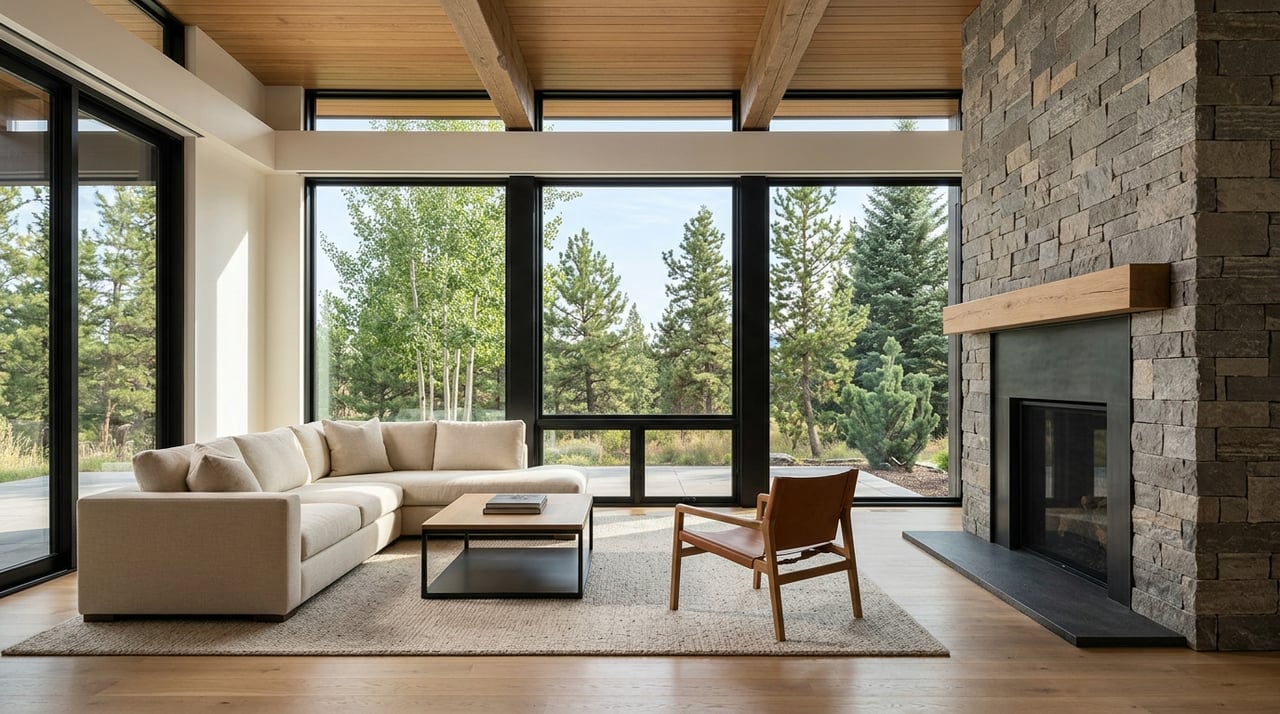
Custom homes are also well suited to buyers who want efficiency from day one. According to Montana DEQ, features such as high-performance windows, insulation, air sealing, and efficient heating systems are generally easier and less expensive to include during construction than to add later. If long-term comfort and operating performance matter to you, that is a real advantage.
A custom build lets you shape the property around how you actually plan to live on the land. You can prioritize shop space, guest accommodations, horse facilities, equipment access, outdoor living, or a more view-oriented design. That kind of tailoring is one of the strongest reasons buyers choose to build.
NAHB notes that custom homes are typically built on customer-owned land and involve a higher degree of design participation. In practical terms, that means your decisions matter more at every stage. It also means the process asks more of you in time, planning, and patience.
The biggest drawback to building is uncertainty. Costs, scheduling, approvals, and site conditions can all shift as the project moves forward. What looks straightforward on paper can become more involved once utility planning, access work, septic review, and design details come into play.
NAHB’s 2024 cost survey found that construction costs made up 64.4% of the average new-home sales price, with the finished lot accounting for 13.7%. Within construction costs, site work represented 7.6%, and that category includes items such as permit fees, water and sewer inspection fees, and architecture and engineering. Those figures are national averages, but they show why site-related costs deserve close attention before you commit.
Near Bozeman, land is only part of the story. The feasibility of a build depends heavily on county rules, utility access, road access, water, and septic. In Gallatin County, these are not side details. They are core parts of the decision.
Gallatin County requires land use permit approval before construction of most structures in county zoning districts. The county states that the property owner is responsible for obtaining that approval before work begins. That step alone makes early due diligence essential if you are buying land with the intention to build.
The county also notes that it does not issue building permits. Outside Bozeman and Belgrade, applicants are directed to the Montana Department of Labor and Industry Building Codes Bureau, and some smaller residential buildings may be exempt under state rules. If a state permit does apply, DLI says the average plan review takes about three weeks.
If the acreage needs to be split, adjusted, or reconfigured, you may be taking on more than a home build. Gallatin County advises buyers to determine first whether a parcel qualifies for a subdivision exemption or whether standard subdivision review is required. Common exemptions can include agricultural exemption, family transfer, common-boundary relocations, and mortgage survey or security for construction financing.
Zoning and subdistrict rules can also affect minimum lot size, lot width, density, and other standards. In other words, not every attractive parcel is automatically ready for the plan you have in mind. A ranchette purchase should be evaluated for both physical suitability and regulatory fit.
Utility planning often takes longer than buyers expect. NorthWestern Energy states that service must be accessible from distribution lines, a permanent address is required, and rights-of-way or easements may be needed. Some installations require at least 60 days of lead time, and projects that need transformers or out-of-stock equipment can take six months or more.
Gallatin County’s Environmental Health office handles septic permits, and DNRC says a recorded water right is required for the majority of water uses in Montana. The county also requires a Road Access Permit for a new driveway off a county-maintained road, and the GIS office issues the official address that may be needed for permits or utilities. These items can strongly affect both your timeline and your budget.
Buying an existing ranchette often appeals to buyers who value speed and predictability. The house is already built, the site improvements are in place, and the utility setup is largely known. That can remove a significant amount of guesswork.
In a market where prices remain elevated, that certainty can be valuable. Instead of managing design, approvals, and construction sequencing, you are evaluating a finished property. You can focus on condition, fit, and due diligence rather than the moving parts of a build.
With an existing ranchette, you can inspect the roof, heating system, driveway, fencing, shop, outbuildings, and other physical improvements before closing. That is a practical advantage over building, where many cost items remain unknown until later phases of the project. Seeing the actual property helps you make a more informed decision.
This path also tends to compress the timeline. You still need inspections, title work, and property-specific diligence, but you avoid the many months that a new build can require. NAHB reported that the average time to complete a single-family home in the U.S. was 10.1 months in 2023, while homes built for sale averaged 8.9 months.
Buying does not eliminate risk. It simply changes the kind of questions you need to answer. For a rural property, buyers should verify septic permits, water rights, zoning, covenants, legal address, road access, and any floodplain considerations handled by County Planning outside Bozeman and Belgrade.
If the property is within Bozeman city limits, city rules also come into play. The city states that every job site needs an active building permit, and impact fees are one-time charges tied to water, sewer, fire/EMS, and transportation capacity. If you plan to remodel, add structures, or expand utility use, those local requirements should be part of your planning.
Time is often the deciding factor between building and buying. If you want a near-term move, buying an existing ranchette usually offers a much shorter path. If you are willing to wait for a more customized result, building may be worth the longer runway.
Fannie Mae supports construction-to-permanent financing, including single-close and two-close structures. That can help simplify financing for a new build, but it does not remove construction scheduling risk. Rural projects still depend on coordination among approvals, contractors, utility providers, and site conditions.
Carrying costs also deserve attention. During a build, you may be paying for land, design, permitting, and financing before the home is complete. For city-limits projects, Bozeman says impact fees should be budgeted early, and city utilities involve ongoing water, sewer, and stormwater charges after move-in. A rural property on well and septic will have a different ownership cost profile.
Even if you expect to hold the property for years, resale should stay in the conversation. The strongest rural properties often create the least friction for the next buyer. Good access, documented water and septic systems, clear zoning and covenants, and a broadly functional floor plan can all support future marketability.
This is especially important with custom homes. Because custom builds are often highly individualized, the more tailored the design becomes, the narrower the future buyer pool may be. A highly personal home can still be exceptional, but it may appeal to fewer buyers when it is time to sell.
Location also plays a role in resale near Bozeman. HUD’s analysis suggests that properties closer to Bozeman’s core may command a premium for convenience and more established infrastructure, while farther-out sites may offer more privacy and flexibility but require more work on access, utilities, and approvals. That does not make one better than the other. It simply means each choice attracts a somewhat different buyer later on.
If you want a very specific site and a home designed around your exact priorities, building may be the better path. It gives you more control, but it also asks for more time, more decisions, and more tolerance for moving parts. In Gallatin County, it is especially important to evaluate zoning, water, septic, utility access, driveway access, and permit requirements before moving forward.
If you value speed, certainty, and the ability to inspect a finished property before closing, buying an existing ranchette may be the stronger fit. You can evaluate what is already there, understand the property’s current setup, and move with more confidence on timing. In a premium market like Bozeman, that clarity can be just as valuable as customization.
Whether you are comparing acreage to build on or weighing finished ranchettes near Bozeman, a careful property-level review can save you time and protect your options. If you want discreet guidance on rural property strategy in Montana, Stacie Wells offers experienced insight tailored to luxury land, ranchettes, and legacy acreage.
Stay up to date on the latest real estate trends.
Get assistance in determining current property value, crafting a competitive offer, writing and negotiating a contract, and much more. Contact Stacie today to discuss all your real estate needs!
Let's Get Started